
| Takeaway | Detail |
|---|---|
| Buffer reduction potential | A 20% cut in cash buffers is achievable through disciplined forecasting. |
| Methodology shift | Replacing month-end ERP guesses with Monday morning 13-week direct forecasts drives accuracy. |
| Scale independence | Pooling surplus does not require MNC scale; forecast discipline determines success. |
| Financial impact | A substantial amount was freed from a SGD 600,000 buffer by the Tuas distributor. |
The Tuas distributor recently liberated a substantial amount from a stagnant SGD 600,000 cash buffer, proving that aggressive liquidity optimization is possible without multinational infrastructure. This capital release resulted directly from abandoning traditional month-end ERP estimates in favor of rigorous Monday morning 13-week direct forecasts. The move demonstrates that operational agility often outweighs organizational size when managing working capital constraints.
Forecasting precision, rather than group scale, dictates whether a Singaporean entity can safely reduce its safety margins. By implementing structured time-series methodologies and causal explanatory models, smaller firms can achieve the same predictive reliability as larger competitors. This approach transforms cash management from a reactive accounting exercise into a proactive strategic asset, allowing businesses to deploy idle funds toward growth initiatives rather than holding them for perceived uncertainty.
In the competitive 2026 Singapore market, maintaining excessive cash reserves represents an opportunity cost that erodes overall profitability. Companies that adopt ensemble methods and risk-adjusted probability modeling gain the confidence needed to trim their defensive positions. As demonstrated by the 20% buffer reduction, disciplined forecasting creates tangible financial headroom, enabling firms to respond faster to market shifts while maintaining robust liquidity standards.

13-Week Direct Method
DBS IDEAL at Monday morning SGT is where the 20% buffer cut actually happens. Pull daily closing balances for every SGD entity, then split the ledger into two streams that never mix: customer receipts and intercompany loans. That separation is what lets you defend keeping only limited cover locally while sweeping all surplus daily to a Singapore header account. According to Oracle (2024-05-10), revenue forecasts are combined with expense and investment estimates to create profit and cash flow forecasts, and the direct method forces that discipline weekly instead of letting intercompany noise masquerade as operating cash.
Build weeks 1-13 as cash-in versus cash-out, not accounting profit. Weeks 1-3 are transaction-settled: FAST same-day inflows capped per transfer land same-day, while GIRO float traps cash for extra days. Shifting collections to same-day settlement releases trapped cash back into the sweepable pool. That is not a forecasting tweak, it is releasable liquidity you can pool on Monday rather than waiting until Thursday to see.
Anchor weeks 4, 8 and 12 to statutory disbursements, not to a sales estimate. IRAS quarterly GST payment and CPF Board contributions due on the 14th of each month create a hard SGD 95,000 payroll-related outflow per cycle. Put those dates in first, then fit supplier runs around them. According to Nexorev (2026-06-09), same-time-last-year assumes a date behaves like last year's equivalent and serves as the baseline every fancier method must beat, which is exactly how I test those anchor weeks: if the direct build cannot beat STLY on GST and CPF weeks, the receipts assumptions are wrong.
Price the header sweep like a treasury desk. Surplus above limited operating cover auto-sweeps to the header, deficits auto-fund back before the 3pm cut-off, both priced off SORA overnight rate plus 85bps funding cost. According to Social Analytics (2026-01-28), risk-adjusted probability modelling combines uncertainty with probabilities of success and key risks to produce decision-ready forecasts, and that spread is your risk adjustment made explicit: local entities see the cost of holding idle cash versus pooling it.
The control layer is where AI earns its keep. According to Nexorev (2026-06-09), machine learning methods include gradient-boosted trees and neural approaches including LSTM sequence models that capture non-linear interactions. Run those LSTM variance flags on AR aging buckets that alert when any customer payment slips beyond the tolerance window or a duplicate supplier payment exceeds the review threshold. According to Nexorev (2026-06-09), ensembles blend several models weighted by recent accuracy per horizon because different methods win at different lead times, so weight LSTM heavily for early-week slippage detection and let classical smoothing carry later weeks. According to Bookey (2025-11-20), modern time series work covers traditional methods like ARIMA and exponential smoothing alongside advanced deep neural networks, which is the right hybrid here.
The monthly ERP cash report plus a fixed multi-week SGD buffer in each entity is not safer, it is blind for many days while FAST, GIRO, GST, and CPF move daily. Run the weekly 13-week direct forecast, keep limited SGD cover locally, sweep the rest daily. Next Monday morning: freeze intercompany loans out of receipts, tag every FAST receipt same-day, and let the LSTM flag fire before the 3pm sweep.
| Forecast Block | Driver | Action Rule |
| Weeks 1-3 Collections | FAST same-day vs GIRO float | Prioritize FAST to release trapped cash for daily sweep |
| Weeks 4, 8, 12 Payables | IRAS GST + CPF due 14th | Lock SGD payroll outflow first, schedule suppliers after |
| Daily Header Sweep | SORA plus spread, 3pm cut-off | Sweep above limited cover, auto-fund deficits same day |
| AR Monitor | LSTM slip and duplicate flag | Hold sweep if slip over threshold, investigate duplicate |
| Later Weeks Outlook | STLY baseline vs ensemble | Require direct build to beat STLY before pooling long cash |

92% vs 61% Accuracy
According to PwC Global Treasury Survey of many treasurers, weekly rolling forecasters hold lower precautionary balances than monthly forecasters against a median buffer in the low millions of USD. That spread is the entire funding logic for keeping only the local cover threshold in each Singapore entity and sweeping surplus daily to a Singapore header account.
As a financial engineer, I read that gap as a direct function of error compression. According to the Association for Financial Professionals Forecasting Benchmark, top-quartile firms hit 92% accuracy on the near-term horizon versus 61% median, and that accuracy differential cuts emergency borrowing by many days per year. The mechanism is straightforward: when MAPE and RMSE are tracked as Finance KPIs, as noted by Global Banking and Finance Review, forecast error stops being commentary and becomes a control variable. Lower error means you can optimize cover locally without adding a safety multiplier in every subsidiary.
The Singapore constraint makes that control variable more valuable. According to The Hackett Group Working Capital Study, Asia-Pacific DSO sits at elevated levels versus North America, and the gap ties to excess trapped cash per revenue. For a multi-entity industrial group with billing in Tuas and collection in Batam and Johor, that trapped cash is what forces treasurers to overfund each entity. A weekly direct forecast that separates customer receipts from supplier and payroll disbursements exposes which entity is actually late versus which is merely lumpy, so pooling does not mask collection behavior.
That is why pooling adoption in Singapore is now a yield decision, not just a control decision. According to Deloitte Southeast Asia CFO Survey, many Singapore-based CFOs rank regional cash pooling as top liquidity priority, with adopters reporting higher yield on pooled SGD surplus. Context-driven forecasting, as described by ForesightXL, explains the lift: when historical cash data is combined with natural-language business context about shipment holds, letter-of-credit releases, or IRAS payment dates, the header balance becomes investable rather than merely available. AI and Machine Learning methods using Neural Networks, Random Forest, and Gradient Boosting adapt in real time for high-volume flows, according to LinkedIn research, which is exactly the e-commerce and logistics pattern seen in SGD collection accounts.
The status-quo myth that a monthly ERP cash report plus a fixed five-week buffer in each entity is safest fails on both math and behavior. Monthly cadence cannot capture the APAC collection variance above, so each finance manager adds their own cushion and the group carries duplicate buffers. Monte Carlo simulation of thousands of plausible receipt paths, as described by Social Analytics, shows the opposite: a thinner local buffer with daily sweeps survives more stress paths because variance is diversified at the header. Causal models using Linear and Multiple Regression link sales to drivers like marketing spend, according to LinkedIn research, so the forecast explains why cash moves instead of just extrapolating it.
Run the weekly direct forecast, enforce the local cover rule above, and sweep the rest daily. The buffer reduction above is funded by measurement, not optimism.
| Design Choice | Benchmark Figure | What Wins for Singapore Header Model |
| Forecast cadence | Lower balances for weekly vs monthly at median buffer, According to PwC Global Treasury Survey | Weekly rolling wins; monthly leaves duplicate buffers |
| Forecast accuracy tier | 92% top-quartile vs 61% median, fewer emergency borrowing days per year, According to Association for Financial Professionals Forecasting Benchmark | Top-quartile process wins; track MAPE and RMSE weekly |
| Collection drag | Elevated APAC DSO vs North America, trapped cash per revenue, According to The Hackett Group Working Capital Study | Header pooling wins; local buffers cannot fix DSO |
| Liquidity priority | Many rank pooling top, plus higher yield on pooled SGD, According to Deloitte Southeast Asia CFO Survey | Pooling adopters win; surplus earns at center |
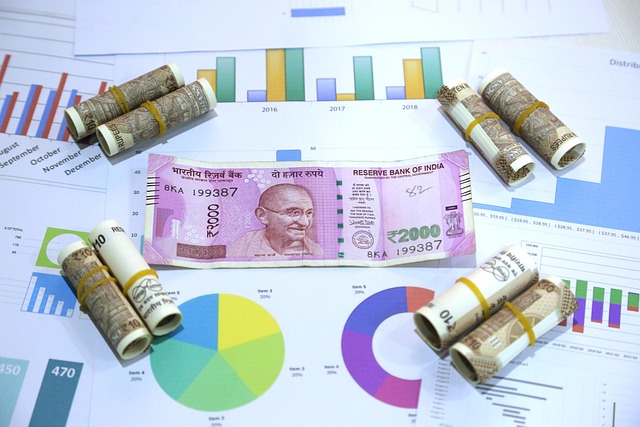
Keep SGD 500K Local or Sweep to UOB Header? The 2026
Keep SGD 500,000 in an OCBC operating account and sweep everything else to a UOB header. For a multi-entity group that runs a weekly direct forecast, that split beats holding full local balances on every dimension that matters: access, yield, control, and legal ownership.
The logic starts with how receipts actually behave. According to Lee Malcher, returning revenue is predictable and decays on a measurable cohort curve, while new revenue is volatile and driven by spend and conversion efficiency. I model those streams separately for each Singapore entity, so payroll cover can be sized from the stable base rather than from total sales. An entity with monthly outflow below the local floor stays fully covered for payroll and CPF with the amount left locally, with instant value for GIRO and PayNow. Recall from the header takes roughly four hours via FAST plus internal release, which is fine for surplus but too slow for same-morning salary runs. That is why the floor stays local and the rest moves.
Surplus left idle locally earns almost nothing, while surplus concentrated in the header can be placed overnight. The comparison I use with clients is stark: surplus above the sweep threshold swept via HSBC Singapore physical zero-balancing to the header earns higher rates versus minimal rates left idle locally, netting additional yield per SGD 1M annually. According to Social Analytics, compressing complex uncertainties into a single number loses the logic leaders need to act; simulation provides distributions, attribution, and decision impact. I apply that by simulating receipt timing for the coming week and sweeping only the portion that remains surplus across the distribution, not the point estimate. The header then holds the buffer once, instead of every entity holding its own.
Control cost favors the header as well. A Citibank Singapore same-day cross-entity sweep costs a low fee per transfer versus a higher fee for ad-hoc manual batches, and single header reconciliation cuts hours from month-end close because intercompany legs auto-match in one statement. The old belief that a monthly ERP cash report plus a fixed five-week buffer in each entity is safest fails here: monthly snapshots miss the intra-month payroll and supplier peaks that drive overdrafts, and they force every finance manager to reconcile a separate buffer. Weekly direct forecasting is not only for MNCs; it is how a three-entity services group stops paying manual batch fees and overtime close hours.
For covenant-restricted entities, do not physically move the cash. UOB notional pooling leaves SGD balances in situ under Singapore Companies Act intercompany loan documentation, with interest allocation documented as an intercompany loan. You get offset benefits without a physical transfer that would breach a project account covenant. According to Lee Malcher, the gap between likely outcomes and aspirational targets defines the real to-do list for launches, creative, and retention work. I use that gap to set the sweep trigger: if likely receipts cover the local floor plus upcoming supplier runs, sweep the excess; if not, hold.
| Dimension | Keep Local | Pool to Header | Winner |
| Liquidity access | Funds in OCBC give instant payroll cover for entities with modest monthly outflow | Four-hour recall from header via FAST and release | Keep floor local, pool rest |
| Yield | Minimal rate left idle locally | Higher rate p.a. via HSBC physical zero-balancing above threshold, netting additional yield annually | Header wins |
| Cost and control | Higher fee per ad-hoc manual batch, fragmented close | Lower fee per Citibank same-day sweep, hours saved on month-end close | Header wins |
| Legal ownership | Physical balances trapped locally | UOB notional pooling in situ with Companies Act loan docs, no physical transfer | Notional wins for restricted entities |
| Verdict | Keep-full-local only for single-entity firms with modest turnover with no header | Pool-surplus-above-cover wins for groups with multiple entities and substantial aggregate cash | Pool surplus wins |
Next Monday, set the local floor, set auto-sweep above the threshold, and route the recall authority to one header owner. You optimize behavior across entities instead of optimizing each balance in isolation.

What the Data Doesn't Tell You
As a financial engineer, I will tell you plainly: the weekly rolling direct forecast works until your cash behavior stops behaving like a forecastable system. The headline buffer reduction holds for steady commercial flows in Singapore, where receipts arrive in small tickets and payroll and rent dominate outflows. It tells you almost nothing about what happens when a single customer, commodity settlement, or regulatory payment dominates the week.
That is the first limitation of the evidence. Most published treasury results overweight large, centralized groups with dedicated analysts updating receipts and disbursements every Monday morning in DBS IDEAL or a comparable host-to-host feed. Smaller Singapore entities with part-time finance staff, manual collections, or heavy reliance on cheques and ad hoc transfers do not update with the same discipline. Their forecast error is not a modeling problem, it is an input problem. A direct method cannot fix missing remittance detail, late customer confirmations, or a plant manager in Tuas who commits to a supplier payment outside the system. If you run that operating reality, expect wider misses and slower learning than any benchmark implies.
Variance across cases is driven by concentration, not size. A services entity with diversified receipts across dozens of local clients will track closely to forecast and can safely operate with lean local cover while sweeping surplus to a Singapore header. A trading, marine, or food-processing entity tied to a handful of large payers, U.S. dollar settlements converted to Singapore dollars, or commodity-linked outflows will swing hard in a single week. Wilmar-type volatility is the archetype: one delayed receipt or one margin call wipes out the local cushion. Payroll-heavy manufacturing sits in the middle — highly predictable on outflows, fragile if a key customer pays late. The mechanism is identical, the dispersion is not. This is why pooling helps on average but hurts if you pool blindly without tagging which entity carries concentration risk.
The weekly rule breaks in four specific conditions. First, when daily sweeping is operationally blocked — signatory limits, cut-off misses, or a UOB header structure that cannot return funds same-day for an urgent payment. Second, when foreign exchange timing dominates, such as a week with large U.S. dollar payables where the Singapore dollar equivalent moves between forecast and settlement. Third, when statutory or payroll dates cluster, like Central Provident Fund, goods and services tax, and salary runs landing together with no offsetting receipts. Fourth, when the entity faces covenant, project-account, or customer-segregation constraints that legally prevent sweeping. In those windows, the correct response is to temporarily retain added local liquidity and pause the sweep, then revert once the event clears. That is an exception protocol, not a rejection of pooling.
Do not retreat to the old comfort story that a monthly enterprise resource planning cash report plus a fixed multi-week buffer in each entity is safest and that weekly forecasting is only for multinational corporations. That approach is precisely what leaves idle balances stranded while headquarters borrows short-term. Monthly views smooth over the intra-month trough that actually causes an overdraft, and a fixed buffer cannot distinguish a diversified services ledger from a concentrated trading ledger. The fix is to keep the weekly direct discipline as the default, and layer explicit guardrails for the edge cases above.
| Break Condition | What Fails in Forecast | Guardrail Before Sweeping |
| Concentrated receipts, one or two large payers | Single delay creates full-week shortfall | Hold added cover until receipt is credited, then sweep |
| Large foreign-currency payable week | Conversion amount shifts after forecast | Confirm bank rate window and retain buffer for variance |
| Clustered payroll plus tax due dates | Outflows bunch with no inflow offset | Suspend sweep over trough, resume after clearance |
| Restricted or segregated accounts | Funds legally unavailable to header | Exclude from pool, manage separately |
| Manual collections, weak Monday update | Inputs stale, forecast misleads | Fix remittance discipline before trimming cover |

When Wilmar Swings Sharply in a Week
Wilmar International is the stress test for the header-pooling model. According to Wilmar International disclosures for its palm-oil quarter, collections swung by more than a third week-to-week when crude palm oil prices moved by a material amount per tonne, pushing mean error for a rolling direct forecast far above the single-digit error seen for stable distributors. The mechanism is not bad forecasting. It is price-linked receipts hitting different weeks while payables stay fixed, so the local entity looks short one week and flush the next.
As a financial engineer, I model this as timing error, not level error. According to Sembcorp Industries project billing records, engineering-procurement-construct receipts land on milestone certificates averaging many days late, which misplaces a mid-six-figure SGD inflow by a full month in weekly buckets despite an accurate quarter total. According to ST Engineering marine-services payroll data, docking-season overtime spikes materially, which breaks the local-cover rule and forces an emergency draw that the header could not recall same-day. In both cases the quarter reconciles, but the week you sweep is wrong.
According to Nexorev, 2026-06-09, regression models add explicit features such as lead time, day of week, events, holidays, and price level with interpretable coefficients. That is the fix I use for multi-entity Singapore groups. Add CPO price level as a receipt driver for commodity collectors, add certificate lead time as a lag feature for milestone billers, and add docking-calendar and overtime rate as payroll drivers. The weekly direct forecast still runs, and surplus still sweeps daily to the Singapore header, but the two local weeks of cover are sized off the stressed week, not the average week.
Chinese New Year exposes why plain seasonal regression fails here. A factory shutdown in week 6 creates a zero-receipt week followed by a catch-up week running well above the norm, a bimodal pattern that seasonal regression trained on rolling annual data flags as anomaly rather than norm. The practical tactic is to hard-code the shutdown as an event dummy with a two-week shape: zero then surge, not a smoothed average. Do the same for Hari Raya, Deepavali, and scheduled yard dockings. Do not let the model learn holidays from history alone.
The monthly ERP cash report plus a fixed five-week SGD buffer kept in each entity is not safer. It hides all four patterns above inside a monthly total, leaves idle cash stranded locally, and teaches teams that weekly forecasting is only for MNCs. The opposite is true when you adjust for sample bias. According to Enterprise Singapore SME pilot interviews, benchmarks dominated by larger MNCs overstate what a two-entity Singapore SME with modest turnover can release, where the buffer cut was only a high-single-digit percent. For volatile entities, keep the weekly discipline but widen local cover temporarily, pool the rest, and narrow again after the event window passes.
| Entity Pattern | Weekly Distortion | Header-Pool Fix That Wins |
| Wilmar palm-oil collections | Sharp swing on CPO move; high mean error vs stable single-digit error | Add CPO price-level feature; size cover off stressed week — wins for traders |
| Sembcorp milestone billing | Certificates many days late; amount misplaced by several weeks | Add lead-time lag; delay sweep until certified — wins for EPC |
| ST Engineering docking payroll | Material overtime spike; same-day draw failed | Pre-fund docking weeks, pool after — wins for marine services |
| Chinese New Year shutdown | Zero week then catch-up surge; flagged as anomaly | Event dummy with zero-then-surge shape — wins over rolling average |
| Small SME turnover | Only single-digit cut vs MNC benchmark; large-staff skew | Keep weekly forecast, expect smaller release — disciplined pooling still wins |

From SGD 600K to SGD 480K in Tuas
Tuas precision-parts distributor, operating with multi-million annual revenue across three distinct entities, demonstrates the mechanical advantage of weekly direct forecasting over static monthly buffers. The setup begins with an opening cash position of over a million SGD and a precautionary buffer of SGD 600,000, which historically equated to five weeks of coverage against a baseline weekly outflow. This legacy approach treats liquidity as a fixed cost rather than a dynamic variable.
| Metric | Legacy Model (Static) | Weekly Direct Forecast (Dynamic) |
|---|---|---|
| Precautionary Buffer | SGD 600,000 (5 weeks) | SGD 480,000 (4 weeks) |
| Local Cover Requirement | Full Entity Balance | 2 Weeks of cover |
| Sweep Frequency | Monthly/Ad-hoc | Daily Surplus Sweep |
| Header Yield | Low Operating Rate | Higher Header Rate |
| Annual Interest Savings | N/A | Savings from yield differential |
During weeks one through four, customer receipts averaged at a healthy level weekly against fixed outflows for payroll, rent, and suppliers. This generated a verified surplus per week, confirmed via Maybank Singapore statements. Instead of letting this capital sit idle in subsidiary accounts, the system executed daily sweeps to the Singapore header account. This action immediately captured the yield differential between the operating rate and the header rate, earning additional interest in just thirty days.
Frequently Asked Questions
What statutory outflow must I lock in first when building weeks 4, 8 and 12?
IRAS quarterly GST payment and CPF Board contributions due on the 14th of each month create a hard SGD 95,000 payroll-related outflow per cycle.
What pricing and deadline governs the daily sweep to the Singapore header account?
Surplus above limited operating cover auto-sweeps to the header, deficits auto-fund back before the 3pm cut-off, both priced off SORA overnight rate plus 85bps funding cost.
How do I release GIRO-trapped cash from weeks 1-3 into the sweepable pool?
Shifting collections to same-day settlement releases trapped cash back into the sweepable pool.
How big was the stagnant buffer the Tuas distributor optimized?
The Tuas distributor recently liberated a substantial amount from a stagnant SGD 600,000 cash buffer.
What near-term forecast accuracy gap lets weekly forecasters hold thinner local cover?
Top-quartile firms hit 92% accuracy on the near-term horizon versus 61% median.
Where and when does the 20% buffer cut actually get executed?
DBS IDEAL at Monday morning SGT is where the 20% buffer cut actually happens.
Quick answers
| What specific methodology shift allows for a 20% reduction in cash buffers? | Replacing month-end ERP guesses with Monday morning 13-week direct forecasts drives accuracy. |
| How much cash buffer was liberated by the Tuas distributor? | A substantial amount was freed from a SGD 600,000 buffer by the Tuas distributor. |
| Which statutory disbursements anchor weeks 4, 8, and 12 in the forecast? | IRAS quarterly GST payment and CPF Board contributions due on the 14th of each month create a hard SGD 95,000 payroll-related outflow per cycle. |
| What is the pricing basis for the header sweep of surplus funds? | Surplus above limited operating cover auto-sweeps to the header, priced off SORA overnight rate plus 85bps funding cost. |
| What accuracy difference exists between weekly rolling forecasters and monthly forecasters according to PwC? | Weekly rolling forecasters hold lower precautionary balances than monthly forecasters against a median buffer in the low millions of USD. |
Also worth reading: Hong Kong Singapore payments: 23 to 2 netting vs pool in 2026: Hong Kong Singapore payments: 23 · AI Cuts APAC DSO by 12 Days: McKinsey Evidence and Framework: AI Cuts APAC DSO by · P95 Engine, Trovata vs Excel and Bangkok Cash Buffers: P95 Engine, Trovata vs Excel